HVAC and facility ventilation
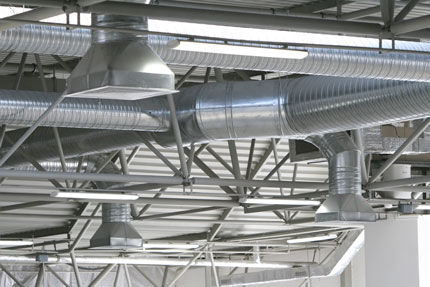
HVAC systems supply buildings with treated supply air and ensure defined air quality, temperature, and humidity. Air filters are far more than simple consumables: they determine indoor air quality, the energy consumption of the system, and the service life of downstream components such as heat exchangers, cooling coils, and fans. Incorrectly dimensioned or low-quality filters lead to higher pressure drops, increasing operating costs and, in the worst case, hygienic problems in the supply air.
For more than 45 years, HS-Luftfilterbau has been developing and manufacturing air filters for the entire range of climate control and ventilation technology – from prefilters in outdoor air intakes to high-efficiency particulate filters in supply air ducts. All products are tested in our own ISO 16890 testing facility and optimized for maximum energy efficiency combined with long service life. Whether standard dimensions or customized solutions: we deliver filters that fit your system perfectly.
Why Air Filtration in HVAC Systems Is Essential
Depending on the location, outdoor air contains a wide range of contaminants: fine particulate matter (PM10, PM2.5 and PM1), pollen, spores, road abrasion, industrial emissions, and gaseous pollutants such as nitrogen oxides or ozone. Without effective filtration, these particles enter the building air directly, with measurable consequences for the health and well-being of occupants.
At the same time, filtration protects the system components themselves. Particles deposit on heat exchanger surfaces and reduce heat transfer efficiency, clog cooling coils, and contaminate humidification systems. A well-designed filtration concept significantly extends the maintenance intervals of the entire HVAC system.
In buildings with high occupancy levels – offices, schools, hospitals, and shopping centers – indoor air quality (IAQ) is increasingly recognized as a productivity and health factor. Studies show that reducing PM2.5 concentrations by 10 µg/m³ measurably improves the cognitive performance of building occupants. Good air filtration is therefore not only a technical requirement but also an investment in productivity and building value.
Standards and Regulations: ISO 16890, VDI 6022 and Energy Efficiency
ISO 16890 – The Key Test Standard for HVAC Filters
Since 2017, ISO 16890 has replaced the former EN 779 as the international standard for classifying air filters used in general ventilation systems. The decisive advancement: instead of a single synthetic test aerosol, ISO 16890 evaluates filtration efficiency against three real particle size fractions – PM10, PM2.5 and PM1. This allows a direct assessment of how effectively a filter protects against health-relevant fine particulate matter.
The classification is divided into four groups, named after the smallest particle fraction for which at least 50% filtration efficiency is achieved:
- ISO Coarse – coarse dust filters without PM classification (PM10 efficiency < 50%)
- ISO ePM10 – at least 50% efficiency for particles ≤ 10 µm
- ISO ePM2.5 – at least 50% efficiency for particles ≤ 2.5 µm
- ISO ePM1 – at least 50% efficiency for particles ≤ 1 µm
Within each group, the filtration efficiency is expressed as a percentage value – for example “ISO ePM1 70%” for a filter that removes 70% of all particles ≤ 1 µm. The higher the value, the more effective the filter against respirable fine dust. HS-Luftfilterbau tests all HVAC filters according to ISO 16890 in its own testing facility and documents the results in the product data sheets.
VDI 6022 – Hygiene Requirements for HVAC Systems
The VDI 6022 guideline defines the minimum hygienic requirements for HVAC systems in Germany. For filtration, it specifies a two-stage filter concept: the first stage (prefilter) protects the system and the second filter stage, while the second stage (main filter) ensures the required supply air quality. The guideline defines minimum filter classes – currently at least ISO ePM10 50% as a prefilter and at least ISO ePM1 50% as a main filter for hygiene-relevant applications.
In addition, VDI 6022 requires regular hygiene inspections of filters and filter housings. Filters must not provide a breeding ground for microbial growth – one reason why HS-Luftfilterbau uses fully synthetic filter media that do not promote the growth of mold or bacteria. Upon request, we supply filters with biostatic treatment for particularly sensitive applications such as hospitals and healthcare facilities.
Energy Efficiency: The Largest Cost Factor in the Lifecycle
The purchase cost of an air filter typically represents only 10–15% of the total lifecycle cost. The remaining 85–90% is caused by the energy consumption of the fan required to move air through the filter. The decisive factor is therefore the pressure drop: a filter with a lower initial pressure drop and a flatter pressure increase over its service life saves significant energy throughout its operating lifetime.
The European energy classification according to Eurovent rates air filters from A+ (very energy-efficient) to E (high energy consumption). With the AirSynErgy product line, HS-Luftfilterbau achieves energy class A+ and offers up to 30% lower operating costs compared with conventional filters of the same filtration class. Thanks to fully synthetic media, pressure drop remains stable even under fluctuating humidity levels – unlike glass fiber filters, which can swell under high humidity and cause sudden increases in pressure drop.
Multi-Stage Filtration Concepts: From Prefilter to Final Filter
An effective filtration concept in HVAC technology operates in multiple stages. Each stage has a clearly defined function and simultaneously protects the following, higher-grade stage from premature loading:
Stage 1 – Prefiltration (ISO Coarse to ISO ePM10)
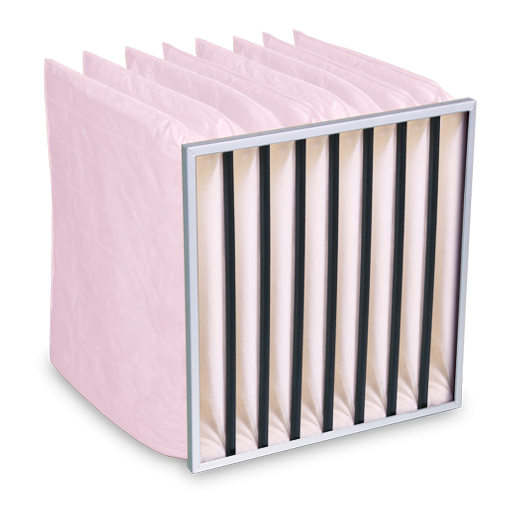
Prefiltration is located directly in the outdoor air intake and captures coarse dust, insects, seeds, and larger particles. Typical filter types include filter mats, filter cells (e.g. HS-Alpha Pak), or coarse dust pocket filters (HS-Pak 25, HS-Pak 35). Prefiltration protects all downstream components – heat recovery systems, cooling coils, and humidifiers – and significantly extends the service life of the main filter. In environments with high outdoor air pollution (industrial areas, major roads), we recommend a robust prefiltration combination of filter mats and pocket filters.
Stage 2 – Main Filtration (ISO ePM2.5 to ISO ePM1)
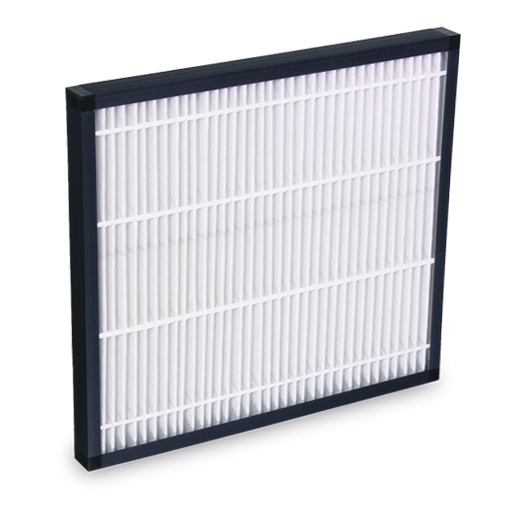
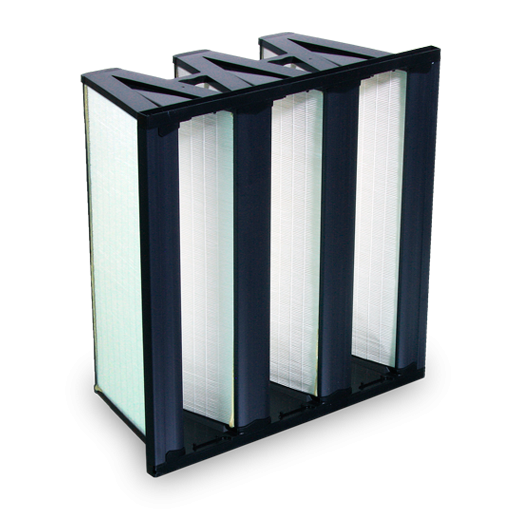
The main filter stage is the central quality filter of the system. It removes fine dust, pollen, bacteria, and spores from the supply air and plays a key role in determining indoor air quality. Depending on requirements, fine dust pocket filters (HS-Pak 88, HS-Pak 95, HS-AirSynErgy) or compact filters (HS-Beta Pak, HS-Mikro Pak) are used. For buildings with higher requirements – such as hospitals or laboratories – an EPA or HEPA filter (E11–H13) can already be installed in the main filtration stage.
Stage 3 – Gas and Odor Filtration (optional)
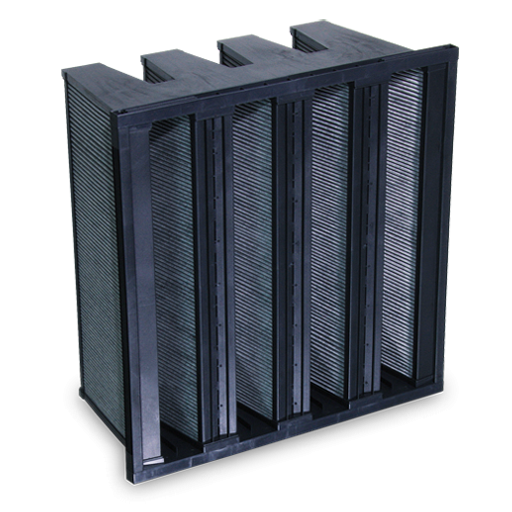
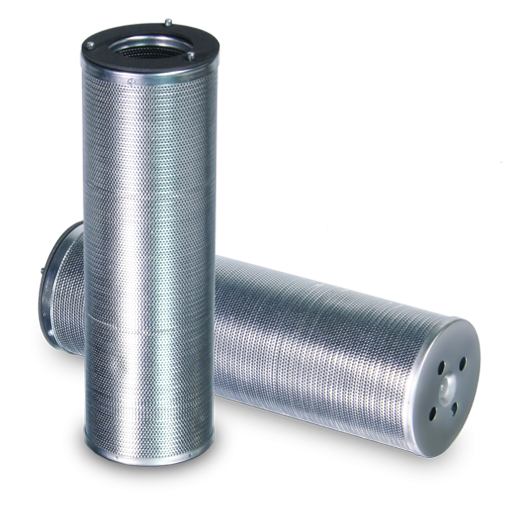
In urban environments or where external odor pollution occurs, an additional adsorption stage with activated carbon filters can be beneficial. Filters from the HS-Carbo-Pak series and HS activated carbon cartridges AKP 26 remove nitrogen oxides, ozone, volatile organic compounds (VOC), and unpleasant odors from the supply air. This stage is increasingly used as “urban air filtration” in office buildings and hotels to significantly improve perceived air quality.
Typical Applications in Building Services
Air filters from HS-Luftfilterbau are used across the entire range of building services – from single-family homes to industrial facilities:
- Office and administrative buildings: Two- to three-stage filtration with ISO ePM1 main filters for high supply air quality. Energy-efficient AirSynErgy filters reduce operating costs while improving indoor air quality.
- Schools and universities: Special focus on PM1 filtration and CO₂ reduction through adequate air exchange rates. Fully synthetic filters without glass fiber emissions protect sensitive respiratory systems.
- Hospitals and healthcare facilities: VDI 6022 and DIN 1946-4 compliant, biostatic filter media, optional HEPA final filtration in sensitive areas. Short replacement intervals thanks to high dust holding capacity.
- Shopping centers and hotels: High air volumes require filters with low pressure drop. Activated carbon stage for odor neutrality in urban locations.
- Data centers: Dust-free cooling to protect sensitive IT hardware. Filters with minimal pressure drop optimize PUE (Power Usage Effectiveness).
- Production and warehouse halls: Robust prefiltration for high dust loads, often combined with modular filter housings for easy maintenance.
Filter Housings and Frame Systems for HVAC Systems
The performance of a filter directly depends on the quality of the filter housing. Leakage in the mounting frame, poorly seated gaskets, or unsuitable housings can significantly reduce the actual filtration efficiency of the entire filter stage – so-called bypass leakage allows unfiltered air to bypass the filter and enter the supply air duct.
HS-Luftfilterbau offers the right frame system for every installation situation: from simple mounting frames for existing systems to filter walls (HS-T021) for duct and wall installation, and the modular HS-Vario CAT duct housing system. All housings are designed to match the sealing profiles of our filters and ensure low-leakage installation according to EN 15805 / EN 1886. For special dimensions and customer-specific installation situations, we manufacture customized solutions.
Filter Replacement, Maintenance and Service
Regular filter replacement is the basis for hygienic operation and energy efficiency. The optimal replacement time is determined by pressure drop (differential pressure): each filter has a defined initial pressure drop and a recommended final pressure drop at which it should be replaced. Replacing filters too late increases energy consumption, while replacing them too early wastes usable service life.
HS-Luftfilterbau supports operators and maintenance providers with comprehensive services: differential pressure measuring devices for monitoring, filter maintenance contracts with scheduled deliveries, on-site hygiene inspections according to VDI 6022, and complete documentation of all filter replacements. Through our online shop, standard filters can be ordered directly and, if desired, delivered automatically via a subscription model.
Your Advantages with HS-Luftfilterbau
- Own testing facility: All HVAC filters are tested according to ISO 16890 in our advanced laboratory – no dependency on external labs and fast response to customer requirements.
- Energy efficiency A+: The HS-AirSynErgy line achieves energy classes A and A+, comparable to Eurovent 4/21, and demonstrably reduces operating costs by up to 30%.
- Fully synthetic media: No glass fiber breakage, no moisture sensitivity, no breeding ground for microorganisms – hygienic and performance-stable.
- Custom dimensions and adaptations: Our manufacturing facility in Kiel allows individual dimensions, frame types, and gasket profiles for every installation situation.
- Expert consulting: Our engineers support you with filter selection, concept planning, and standards-compliant documentation – from the initial request to the operational phase.
Whether new construction or retrofit, single delivery or framework agreement for your entire building portfolio: talk to us. We develop the filtration concept that fits your system and your budget.
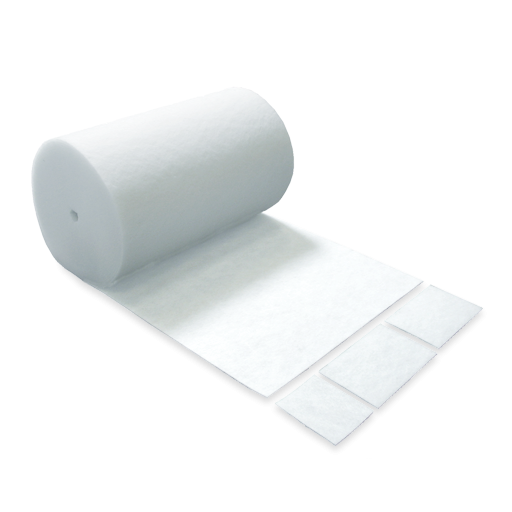
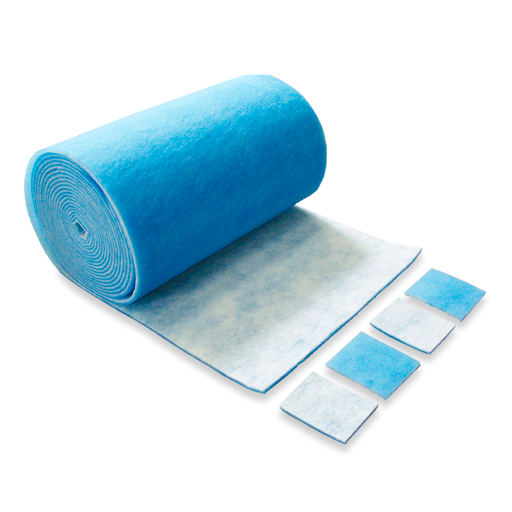





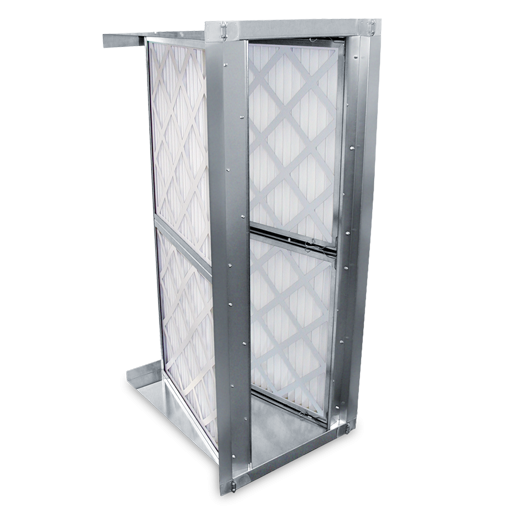
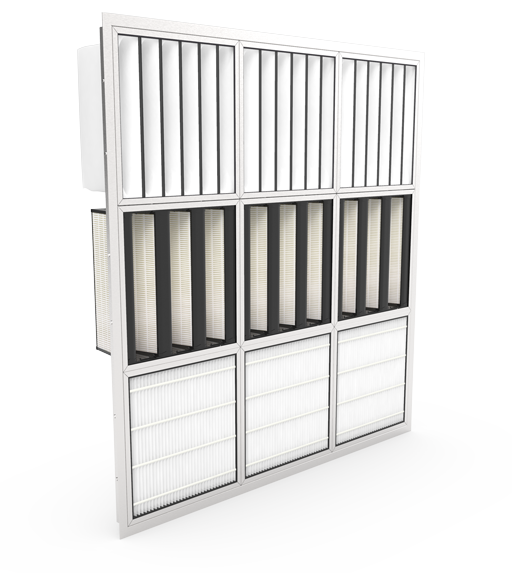

Pre filtration
VDI 6022: Stufe 1
EN 779: G3 – F5
- Filtervliese
- Rollenwaren
- Filtermatten (HS-B290)
- Filterzellen
- HS-Z-Filterzellen
- HS-Alpha Pak
- HS-Spezialfilterzellen
- Rollbandfilter
- HS-O-Fil
- HS-Fibro
Main filtration
VDI 6022: Stufe 2
EN 779: F5 – F9
EN 1822: H11 – H13
- Kompaktfilter
- HS-Beta Pak
- HS-ECO Pak
- HS-Mikro Pak
- HS-Makro (F6-F9)
- Schwebstofffilter
- HS-Mikro (H11-H14)
Aktivkohle
- Aktivkohle
- HS-AKP26 Patronenfilter
- HS-Carbo Pak
