Power Gen & Offshore
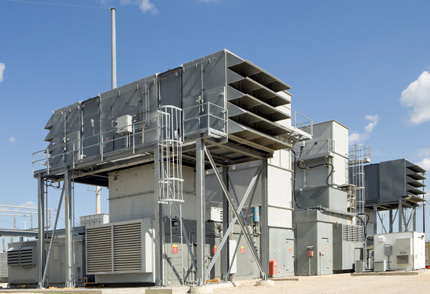
Gas turbines, diesel generator sets, and compressors rely on clean intake air. Even small amounts of salt crystals, moisture, or fine dust particles can cause fouling and corrosion on compressor blades – with measurable consequences for efficiency, output, and maintenance costs. On offshore platforms, in coastal power plants, and in offshore wind turbines, salt aerosols, high humidity, and limited maintenance access further intensify this challenge.
HS-Luftfilterbau develops and manufactures multi-stage filtration systems for power generation at its Kiel facility – from coalescence stages and fine dust compact filters to high-efficiency particulate filters. Our solutions reliably protect turbines and machinery against particulate and gaseous contaminants and are specifically designed for the demanding conditions of maritime and industrial sites: corrosion-resistant materials, high-strength filter elements with burst protection, and modular housing systems that operate safely even under harsh conditions.
Why Air Filtration Is Critical in Power Generation
Depending on its output class, a gas turbine draws in between 50,000 and more than 500,000 cubic meters of air per hour. Every particle that reaches the compressor can cause erosion, fouling, or corrosion. Salt aerosols – typical of coastal and offshore locations – are especially problematic: they deposit on the blades, attract moisture, and form aggressive salt solutions that attack the blade material. The result is a gradual loss of performance that, in unfavorable cases, can cost several percent of turbine output before an extensive offline wash becomes necessary.
Diesel generator sets and gas engines on platforms and in emergency power systems are similarly sensitive to particulate contamination of intake air. In offshore wind turbines, an additional challenge is that electronic components and drive systems inside the nacelles must be reliably protected against salt-laden mist – with severely limited maintenance access at sea.
Standards and Regulations
ISO 29461 – Test Standard for Turbine Air Filters
The ISO 29461 series is the international standard specifically for intake air filters in turbomachinery. It is divided into three parts: ISO 29461-1 defines filter classes from T1 to T13 based on the proven test methods of ISO 16890 (fine dust) and ISO 29463/EN 1822 (high-efficiency particulate filtration). ISO 29461-2 tests the behavior of filter elements under mist and moisture exposure – a decisive criterion for offshore and coastal sites. ISO 29461-3 evaluates mechanical integrity (burst strength) under high differential pressure to ensure that no filter components can enter the turbine during pressure surges.
ISO 16890, EN 779 and ASHRAE 52.2
The general test standards apply to the individual filter stages: Pocket filters and compact filters in the pre- and intermediate stages are classified according to ISO 16890 (ePM10, ePM2.5, ePM1). In the turbine environment, the older EN 779 standard is still widely used, as is the American ASHRAE 52.2 standard. High-efficiency particulate filters (EPA/HEPA/ULPA) used as final stages follow EN 1822 or ISO 29463. HS-Luftfilterbau operates its own testing facility at its Kiel site, where filters are tested according to ISO 29461, ISO 16890, EN 779, and ASHRAE 52.2 – both during filter development and for production-related quality assurance. Upon request – especially for international turbine projects – HS-Luftfilterbau also provides supplementary test certificates from accredited external laboratories.
Additional Relevant Regulations
For nuclear applications – such as supply air filtration in nuclear power plants or decommissioning projects – the requirements of KTA 1401 (Nuclear Safety Standards Commission: ventilation systems) also apply. HS-Luftfilterbau has many years of experience in manufacturing KTA-compliant filter elements and safety housings. For explosion protection on offshore platforms, the ATEX Directive 2014/34/EU and the German Ordinance on Industrial Safety and Health are relevant, depending on the zone.
Multi-Stage Filtration Concept for Turbines and Offshore Applications
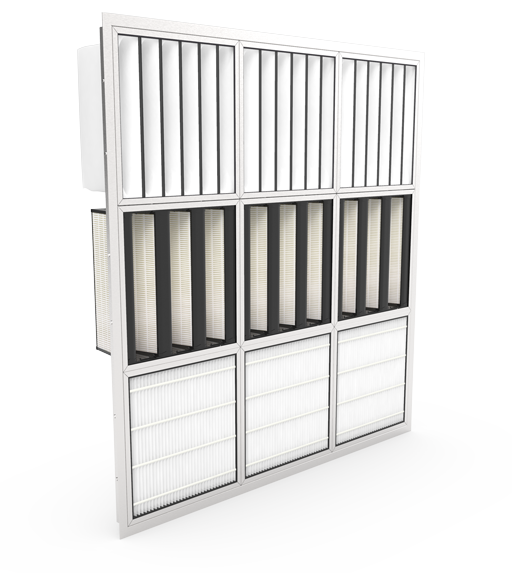
Intake air filtration for gas turbines and offshore applications is typically carried out in three to four stages, which must be precisely coordinated in order to achieve maximum service life with minimum pressure drop:
Stage 1: Weather Protection and Coalescence
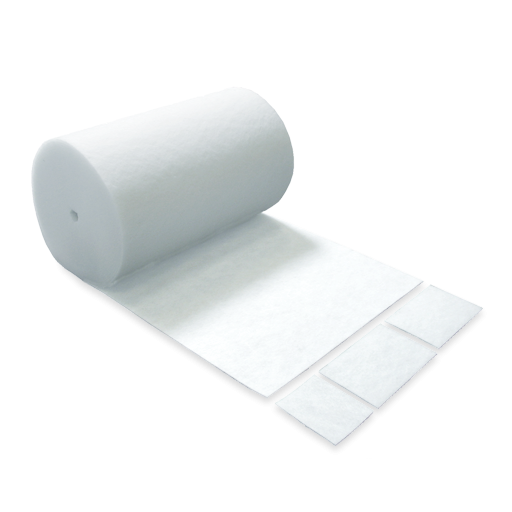
The first stage captures rain, mist, sea spray, and coarse particles. Coalescence filters combine the finest water droplets and salt aerosols into larger droplets, which are separated by gravity and discharged via drainage systems. This stage is indispensable at coastal and offshore sites because it protects the downstream filter stages against moisture penetration and significantly extends their service life.
Stage 2: Coarse Dust Prefilter (ISO Coarse / ePM10)
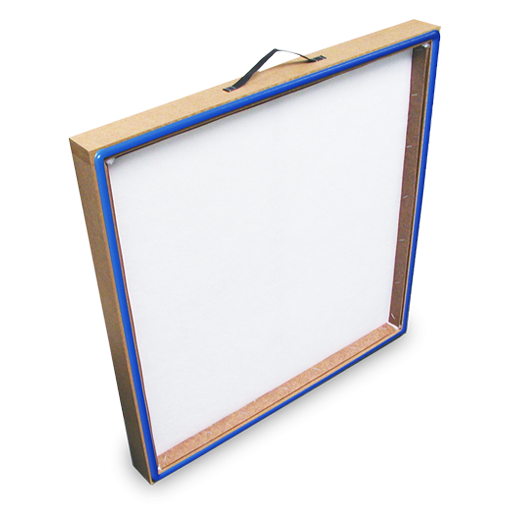
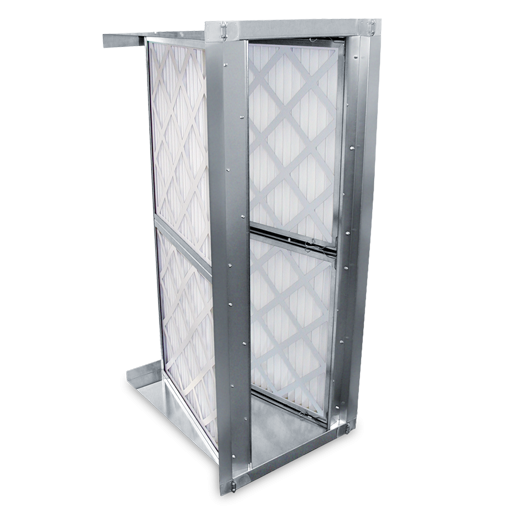
Filter cells or robust pocket filters in the ISO Coarse to ePM10 classes separate coarse dust, sand, and larger salt particles. They protect the downstream fine dust filters and are replaced at short intervals depending on dust load. HS-Luftfilterbau uses fully synthetic filter media here, which are insensitive to moisture and provide stable filtration performance even with fluctuating humidity levels.
Stage 3: Fine Dust Main Filter (ePM2.5 / ePM1)
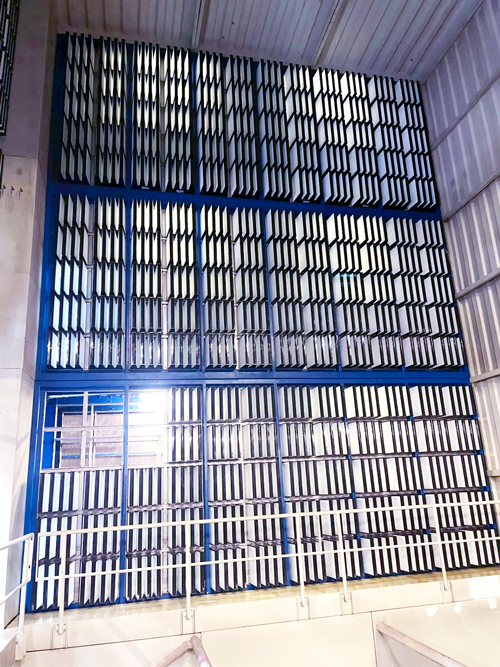
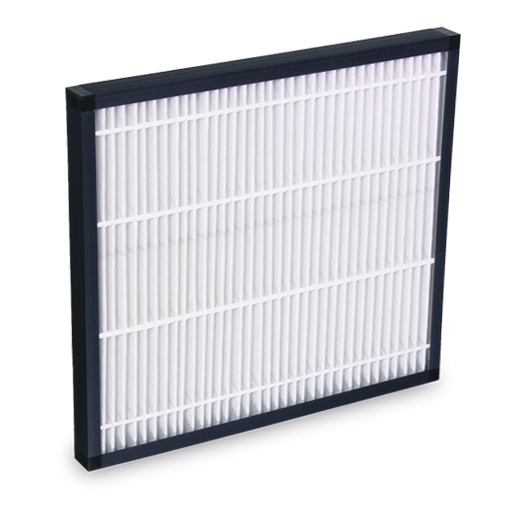
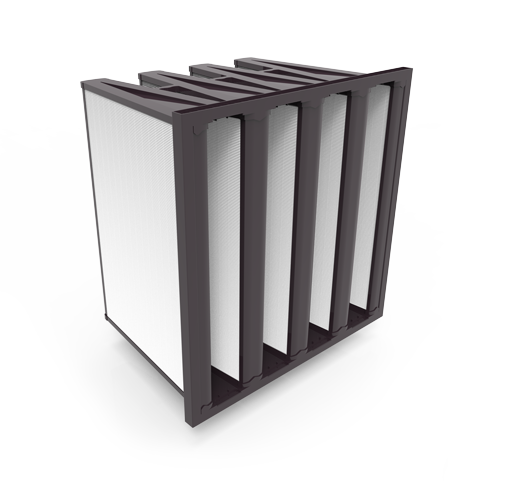
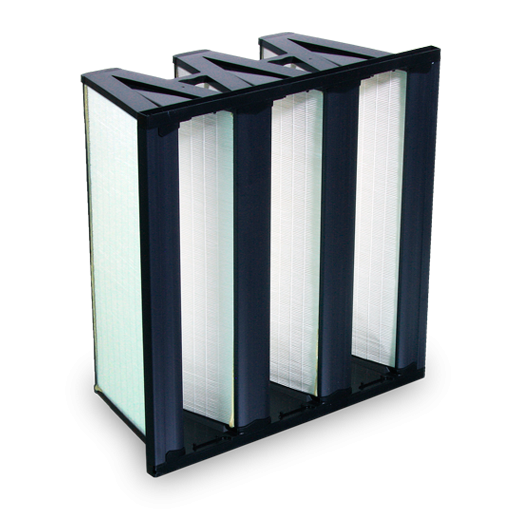
The HS-Mikro Pak is the core filter for turbine applications: as a V-shaped compact filter, it handles air volumes of up to 5,000 m³/h with an installation depth of only 292 mm and provides a large filter surface for long service life. For offshore and turbine locations, the HS-Mikro Pak is optionally available in a high-strength design – with 15% more filter area and a burst protection grid that ensures that, even in the event of extreme pressure surges, no filter components can enter the turbine (relevant for ISO 29461-3).
Stage 4 (optional): High-Efficiency Particulate Filter (EPA/HEPA)
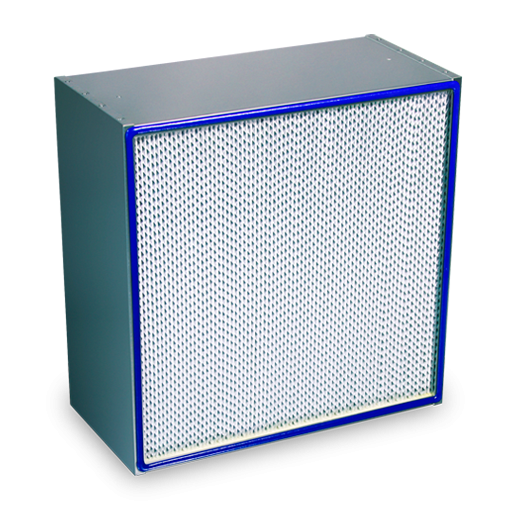
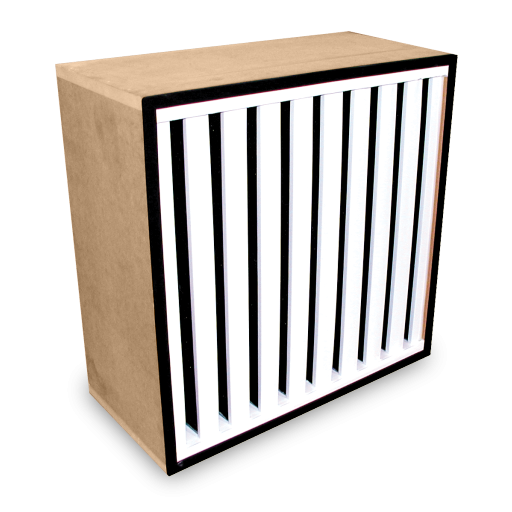
In particularly sensitive applications – such as turbines with high compression pressures or nuclear facilities – a final stage with HEPA filters of class H13 or H14 is added. HS-Luftfilterbau manufactures high-efficiency particulate filters in MiniPleat design (HS-Mikro S, HS-Mikro R), individually tested according to EN 1822 and supplied with a test certificate.
Typical Applications
HS filtration solutions for power generation are used, among other things, in:
- Gas-fired power plants and combined cycle plants: Multi-stage supply air filtration for stationary gas turbines with a focus on fouling prevention and low pressure drop for maximum turbine efficiency.
- Offshore oil and gas platforms: Protection of gas turbines, diesel generator sets, and compressors against salt aerosols, sea spray, and oil mist under extreme climatic conditions.
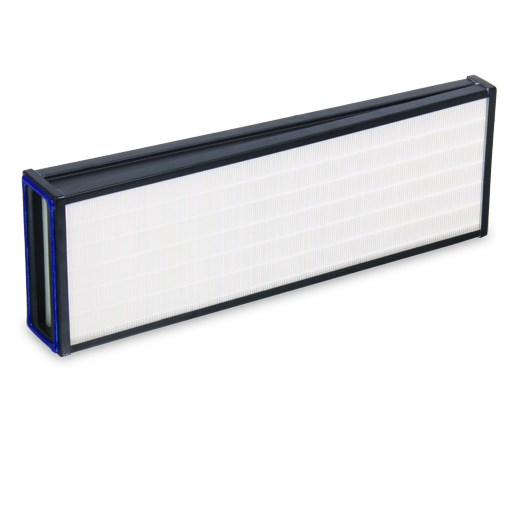
- Offshore wind turbines: In the nacelles, converter housings, and control cabinets of offshore wind turbines, electronic components, gearboxes, and generators must be reliably protected against salt-laden mist and moisture – while maintenance intervals are severely restricted, as every service mission at sea involves major logistical effort. The HS-Alpha Pak has established itself in this field as the preferred solution of leading wind turbine manufacturers: the compact filter cell combines high dust holding capacity with low pressure drop and a particularly robust design that withstands the vibrations and climatic stresses of offshore operation.
- Diesel and gas generator sets: Intake air filters for emergency power and continuous-duty generator sets in coastal regions, on ships, and on platforms.
- Compressors and blowers: Protection against particle and moisture ingress in compressor systems used in the process and energy industries.
- Nuclear facilities: Supply and exhaust air filtration for nuclear power plants, decommissioning projects, and nuclear waste disposal facilities in accordance with KTA 1401.
Housings and Custom Designs
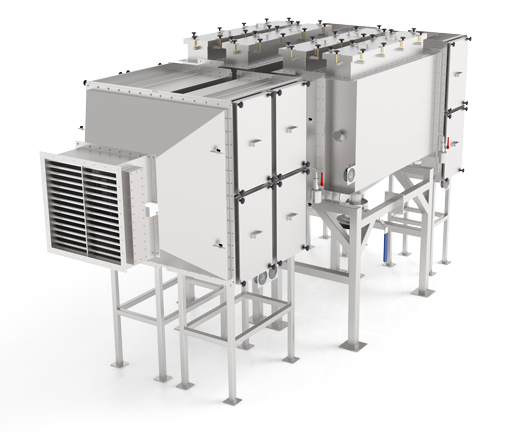
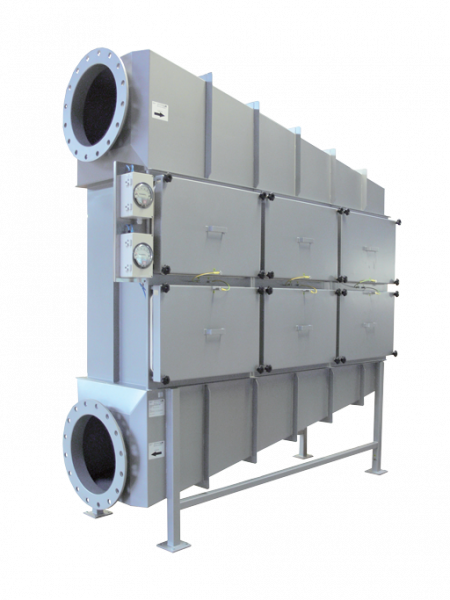
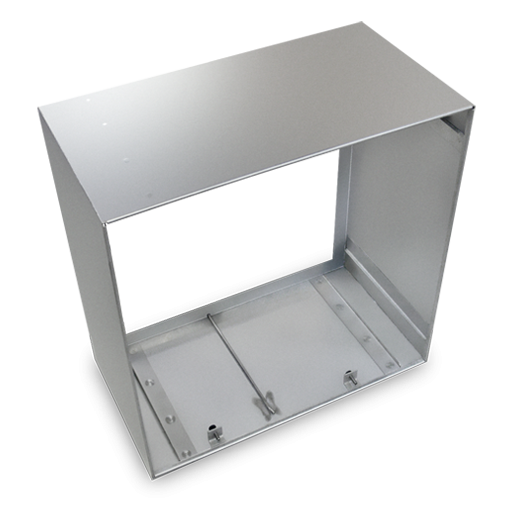
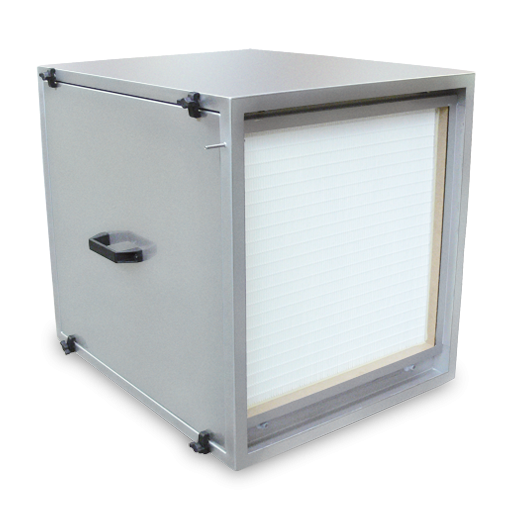
Turbine intake systems place particularly high demands on the mechanical stability, leak-tightness, and corrosion resistance of filter housings. HS-Luftfilterbau manufactures project-specific custom housings made of stainless steel and coated sheet steel, tailored to the respective installation situation and environmental conditions. For nuclear applications, safety housings with bag-in/bag-out replacement technology are available, enabling contamination-free filter replacement.
All housing solutions are manufactured as custom designs at our Kiel facility and can be adapted to the specific on-site requirements – including options such as thermal insulation, weather protection, drainage systems, and ATEX-compliant design for hazardous areas.
Maintenance and Condition Monitoring

On offshore platforms and in turbine systems, every unplanned maintenance event is costly. Long filter service life and reliable condition monitoring are therefore particularly important. HS-Luftfilterbau recommends continuous differential pressure monitoring across all filter stages in order to determine the optimum replacement time and avoid unplanned shutdowns. The combination of large-surface HS-Mikro Pak compact filters with high dust holding capacity and corrosion-resistant housings with quick-change systems reduces the time required for filter replacement to a minimum.
Filter supply for turbine and offshore projects is carried out as part of project-based procurement with individual technical coordination. Our sales team supports you from the initial design and sampling phase through to ongoing filter deliveries.
Your Advantages with HS-Luftfilterbau
- In-house testing laboratory for development and quality assurance: We test according to ISO 29461, ISO 16890, EN 779, and ASHRAE 52.2 – both for filter development and ongoing quality control. For larger turbine projects, at least two samples per batch undergo a complete test cycle. Upon request, we also provide supplementary test certificates from accredited external laboratories.
- High-strength filter elements for turbine applications: HS-Mikro Pak with optional burst protection grid, designed to meet the mechanical requirements of ISO 29461-3 – no material carry-over into the turbine, even during extreme pressure surges.
- Fully synthetic filter media: Moisture-resistant, biostatic, and free from glass fiber breakage – particularly suitable for humid and salt-laden environments at coastal and offshore locations.
- Project-specific custom housings: Individual housing designs made of stainless steel and coated materials, adapted to the installation situation, environmental conditions, and, if required, ATEX requirements – manufactured at our Kiel facility.
- Experience in critical applications: More than 50 years of expertise in filtration for nuclear power plants (KTA 1401), BSL-4 laboratories, and safety-critical industrial facilities – including complete documentation and traceability.
Are you planning a filtration system for gas turbines, an offshore platform, or a nuclear facility? Our engineers support you in the design process – from the concept phase and sampling through to series delivery. Contact us for individual consultation and a project-specific quotation.